Cricket can’t escape the heat
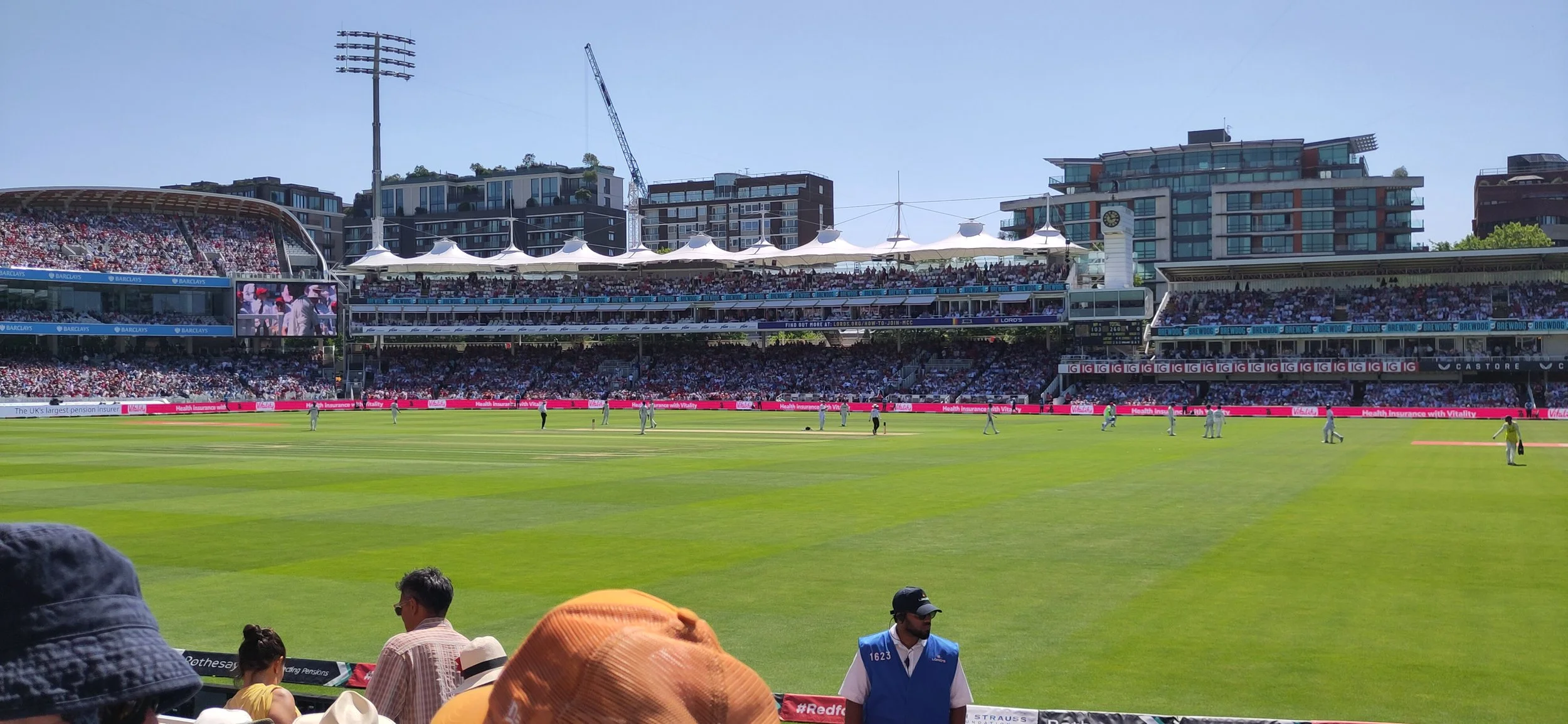
Lord’s swelters in the July heatwave of 2025
By Tanya Aldred
Once upon a time, the UK was a cool country. We lived, died and played cricket on an island without temperature extremes. That time has now gone and, whatever our feelings of despair, we need to velcro our pads and prepare for the next test.
I am old enough – just – to have memories of 1976. Not vivid ones, just a feeling of being too hot and spending a lot of time sitting under the large willow tree in our garden. That one off year, which was spoken of with awe when I was growing up, is now being replaced by fiercer spells of extreme heat that keep on coming. Just last month the UK had its hottest May day ever, and now we are sweltering again, with the record UK temperature for June broken three days in a row.
The latest report from the UK government’s climate change committee warned that, by 2050, heatwaves are expected to exceed 40 degrees in all parts of the UK. Those heatwaves will be longer with an additional 10,000 heat-related deaths a year. We are, they said, completely unprepared for what is to come.
Cricket can’t escape. It will not be the game we remember from our childhoods. Already we are starting to see adaptions. The ECB’s extreme heat policy for the domestic professional game, put together after the 40 degree day of 2022, has a raft of suggestions. The most visible is more hydration breaks – which have been seen during some matches of the Women’s T20 World Cup, with innings divided into three.
The document also suggests a “de-escalation” of flame machines (though why we are still using those to “celebrate,” I cannot tell you), additional staffing so that no steward is in the sun for too long, more air con, extra ambulances, cooling areas, shade for photographers and, as a last resort, the ability to suspend play if the temperature gets too hot.
Unlike Cricket Australia, who stop play when it “feels” like over 43 degrees, there is no strict temperature cut off, with decisions left in the hands of the umpire. This may have to change, and it will be interesting to see if the Professional Cricket Association intervenes.
At the Trent Bridge Test, the ECB brought in extra ambulances and paid for extra doctors. There were more water stations and regular announcements about drinking more water. The stewards set up chairs on the shaded parts of the concourse, as well as extra medical rooms, in the knowledge that some spectators would be from vulnerable groups, and others drinking alcohol, which increases the likelihood of dehydration and heat illness. The players were brought drinks on a regular basis.
English cricket grounds were not built with extreme heat in mind. There is often very little shelter from the sun. As the heat regulations note: “Cricket grounds / stadiums are usually areas of high sun exposure with little shade and capable of exaggerating the ‘feels like’ temperature through reduced cooling potential of available breezes as well as radiation and reflection from the stands and stadium itself.”
Reality is biting elsewhere too.
Cricket Netherlands have published mandatory regulations for this weekend – including more water breaks and a, possible, longer innings break, as well as a plea for sensible behaviour: “Finally, we expect all teams, in this heat, to pay extra attention to the Spirit of Cricket and take into account the warm weather.”
In India, the BCCI are said to be considering moving the IPL tournament window because of the extreme heat the players and spectators are having to enduring in May. A new window will be better for the players, but cause havoc to other national schedules.
As for the ICC, the ruling body, they still have no heat guidelines of their own. They are said to be working on them, albeit at a glacial pace. Perhaps they will appear before the final glacier has melted.